Regional Air Mobility, or RAM, is built around a simple but powerful idea: many trips are too long to feel convenient by car, but too short or too poorly served to make commercial flying attractive.
Think about a 150-, 250-, or 400-mile trip. Driving can eat up most of a day. Commercial air travel may require a long drive to a major airport, parking, security, boarding, a connecting flight, and another long ground transfer at the other end. For many travelers, the hassle makes the car feel like the least bad option.
RAM asks whether we can use smaller aircraft, cleaner propulsion, automation, better operations, and existing local airports to make those regional trips faster and easier. The goal is not to replace every road trip or every airline route. The goal is to open a better middle option for communities that are not well served by today’s hub-focused aviation system.
Why Regional Travel Needs a New Option
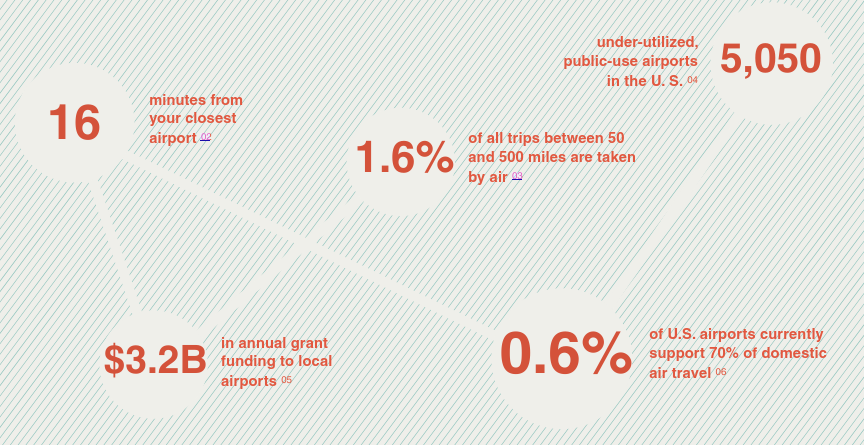
The United States has an enormous aviation footprint. NASA’s RAM work points out that America has more than 5,000 public-use airports, yet a small number of major airports handle most passenger travel. That means the country has already invested in a wide network of aviation infrastructure, but much of it is underused for everyday passenger transportation.
This matters because regional travel is often inefficient. If a person does not live near a major hub, flying may begin with a long drive before the actual air trip even starts. Once they reach the airport, the usual commercial travel process adds more time: lines, security, boarding, delays, connections, baggage, and then ground transportation at the destination.
For trips in the 50- to 500-mile range, that friction can make driving feel simpler even when it is slower. Roads then carry more demand, creating congestion, maintenance costs, emissions, safety risks, and lost time. RAM is a way to ask whether some of that travel could move into the air without requiring massive new airport construction.
What Regional Air Mobility Means
RAM uses emerging aviation technologies to connect communities through smaller, more flexible aircraft. These aircraft may be electric, hybrid-electric, highly efficient conventional aircraft, or future autonomous systems. Many would carry fewer than 20 passengers or a similar cargo payload.
The key is that RAM builds on airports that already exist. Instead of concentrating travelers into a few large hubs, RAM imagines a more distributed network. A traveler could start closer to home, fly directly or with fewer delays to a regional destination, and arrive closer to where they actually need to be.

That is the difference between a road network and a node-based air network. Cars are limited by highways, traffic, construction, accidents, and indirect routing. Aircraft can connect two nodes more directly. If the aircraft are affordable, quiet, clean, and easy to operate from smaller airports, regional air service becomes more practical.
The RAM Vision
NASA’s RAM vision is not only about aircraft. It is a full transportation ecosystem. The white paper highlights three major pieces: community-compatible aircraft, autonomous capabilities, and a seamless passenger experience.
Each piece matters because RAM will not succeed just because new aircraft exist. It needs to be safe, affordable, reliable, convenient, and acceptable to the communities around local airports.
Community-Compatible Aircraft
Community-compatible aircraft are designed to fit into local environments instead of disrupting them. That means lower noise, lower emissions, safer operations, and the ability to use shorter runways closer to the communities they serve.
This is important because regional airports are often near residential areas. If RAM increases flight activity, communities will care about sound, air quality, safety, and local benefit. A quieter, cleaner aircraft is easier to accept than a loud one that feels imposed on the neighborhood.
Electric and hybrid-electric propulsion could be especially important here. Electrified aircraft may reduce operating costs, local emissions, and noise. They could also change the role of regional airports. Instead of being only runways and hangars, airports could become local energy nodes with solar generation, battery charging, ground transportation charging, and resilient energy systems.
That creates a broader value proposition. RAM is not just “more flights.” It can be a way for regional airports to support cleaner transportation, emergency access, cargo movement, local economic development, and renewable energy infrastructure.
Autonomy and Operational Efficiency
Autonomy is another major enabler for RAM, but it does not have to mean fully pilotless passenger flights on day one. Early autonomy may support remote operations, automated flight assistance, cargo flights, aircraft repositioning, or simplified pilot workload.
The reason autonomy matters is economics. Small aircraft carry fewer passengers, so the cost of a pilot is spread across fewer seats. That can make service expensive. Pilot availability is also a constraint, especially if RAM grows into a broad regional network.
Remote or autonomous capabilities could reduce deadhead flights, improve aircraft utilization, and make it easier to rebalance aircraft across a network. For example, an aircraft might reposition without needing to move a full crew in the same way traditional operations do. Even partial automation can help make the system more scalable.
Safety remains the non-negotiable condition. RAM will need certification, operational oversight, clear responsibility, and public trust. Autonomy can improve operations only if it is introduced carefully and validated thoroughly.
A Seamless Travel Experience
The passenger experience may be the most underrated part of RAM. If using a local airport feels confusing, inconsistent, or stressful, people will not switch from their cars.
RAM needs to feel simple from end to end. That includes getting to the airport, checking in, handling bags, boarding, flying, arriving, and connecting to the next mode of transportation. The experience should not require passengers to understand aviation procedures or plan around a complicated airport system.
This is where smaller airports have an advantage. They can be faster and more personal than major hubs. But they also need consistency. Travelers should know what to expect whether they are departing from a rural airport, a small city airport, or a regional business hub.
Airports may also need modest upgrades: better ground transportation links, charging infrastructure, inspection and maintenance support, small cargo handling, digital check-in, or shared fleet services. The good news is that RAM does not require every airport to become a major terminal. Many improvements can be focused and incremental.
Why RAM Is Different from Urban Air Mobility
Regional Air Mobility is often discussed alongside Urban Air Mobility, but the two are not the same. UAM usually focuses on short trips inside or around metropolitan areas, often using eVTOL aircraft and vertiports. RAM focuses on longer regional trips, often between communities, small cities, regional airports, and underserved markets.
The distance range is the easiest distinction. UAM might solve a 10- to 30-mile urban congestion problem. RAM is more interested in the 50- to 500-mile trip where driving becomes time-consuming and traditional air service may be inconvenient or unavailable.
The infrastructure is also different. UAM often depends on new vertiports or adapted rooftops. RAM can often begin with existing airports and runways. That makes it potentially easier to deploy in some places, although aircraft economics, regulation, passenger demand, and local acceptance still matter.
Who Benefits If RAM Works
RAM could benefit several groups.
Travelers gain faster regional access without always depending on major hubs. Small and mid-sized communities gain better connectivity to jobs, healthcare, education, tourism, and business opportunities. Local airports gain a stronger role in community development. Cargo and logistics operators gain new ways to move urgent goods, medical supplies, and small packages. Emergency services gain another layer of mobility during disasters, road closures, or time-sensitive missions.
For rural and underserved regions, the opportunity is especially important. Better transportation access can influence where people live, where companies invest, and how quickly communities can reach essential services.
The Real Challenges
RAM still has major hurdles. Aircraft must become affordable and reliable. Battery and propulsion technologies must meet real mission needs. Airports may need electrical upgrades. Operators must prove there is enough demand to support frequent service. Regulators must certify new aircraft and operations. Communities must see benefits that outweigh concerns about noise, safety, and local disruption.
The business model is also not automatic. A regional flight may be faster than driving, but passengers will compare total cost, door-to-door time, reliability, baggage convenience, and schedule flexibility. RAM succeeds only if the whole trip feels better, not just the airborne portion.
That is why RAM should be viewed as a system, not a single technology.
Final Thoughts
Regional Air Mobility is compelling because it starts from infrastructure the country already has. Thousands of local airports exist, but many are not central to everyday passenger travel. RAM imagines those airports becoming useful again: not as replacements for major airlines, but as connectors for regional trips that are currently underserved.
The promise is practical. More direct travel. Cleaner aircraft. Better use of local airports. New mobility for communities outside major hubs. Faster movement of people and goods across medium distances.
The future of RAM will depend on whether aircraft technology, airport readiness, regulation, public trust, and business models mature together. If they do, regional air travel could become a normal option for trips that today feel stuck between the highway and the hub airport.
References
- Antcliff, K., Borer, N., Sartorius, S., Saleh, P., Rose, R., Gariel, M., Oldham, J., Courtin, C., Bradley, M., Roy, S., Lynch, B., Guiang, A., Stith, P., Sun, D., Ying, S., Patterson, M., Schultz, V., Ganzarski, R., Noertker, K., Combs, C. and Ouellette, R., 2021. Regional Air Mobility: Leveraging Our National Investments to Energize the American Travel Experience. NASA Technical Reports Server. https://ntrs.nasa.gov/citations/20210014033
- NASA, Regional Air Mobility resources. https://www.nasa.gov/reference/ram-resources/