Cybersecurity is a high-stakes domain. A model that flags an intrusion, malware sample, vulnerability, or anomalous behavior can influence urgent operational decisions. Security teams need to know not only what the model predicted, but also why it made that prediction.
That is where explainable AI (XAI) becomes important.
AI models are increasingly used for intrusion detection, malware classification, phishing detection, anomaly detection, vulnerability scoring, fraud detection, and cyber-risk analysis. These models can be accurate, but accuracy alone is not enough when analysts must investigate threats, justify alerts, reduce false positives, and respond quickly.
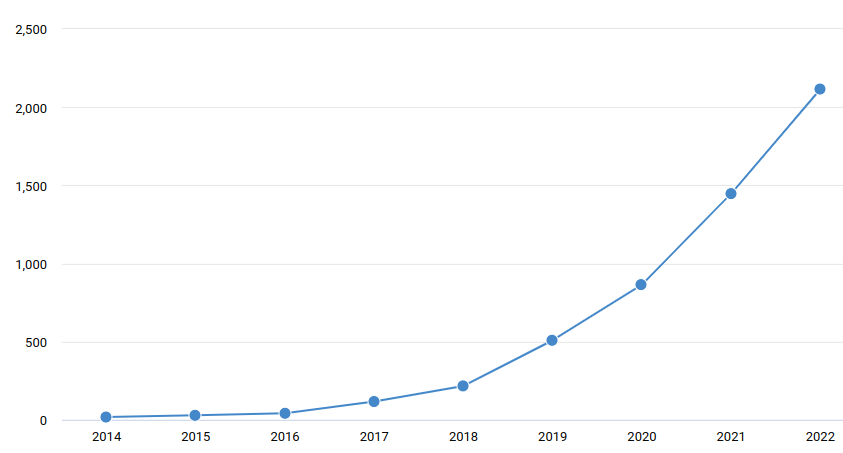
The core question is simple:
Can a cybersecurity model explain its decision in a way that helps a human analyst act?
If the answer is no, the model may still be useful, but it will be harder to trust, debug, deploy, and maintain.
Why Explainability Matters in Cybersecurity
Cybersecurity differs from many other prediction problems because the environment is adversarial. Attackers adapt. Data distributions shift. New malware families appear. Network behavior changes. A model that works well today may become unreliable tomorrow.
In this setting, explanations help in several ways:
- They help analysts understand why an alert was triggered.
- They help distinguish real threats from false positives.
- They expose which features or behaviors influenced the prediction.
- They help security teams debug model failures.
- They make model outputs easier to audit and communicate.
- They support trust when AI is used in operational workflows.
Without explanations, a security model can become another noisy alert generator. With explanations, it can become a decision-support tool.
The Problem With Black-Box Security Models
Many cybersecurity models are trained on high-dimensional data:
- system calls
- network flows
- packet metadata
- DNS behavior
- API calls
- executable features
- log events
- vulnerability descriptions
- user and entity behavior
Deep learning and ensemble models can find complex patterns in this data. But their internal reasoning is often difficult to interpret.
That creates a practical problem. Suppose a model marks a process as malicious. A security analyst needs to know:
- Which behavior looked suspicious?
- Was the decision driven by a meaningful signal or a spurious correlation?
- Is this a known attack pattern?
- Is the model reacting to a rare but benign system behavior?
- What evidence should be checked next?
An unexplained prediction forces the analyst to investigate from scratch. A good explanation can point the analyst toward the most relevant evidence.
Three Roles of XAI in Cybersecurity
Explainable AI in cybersecurity is useful in three broad scenarios.
1. Building Trust in Security Systems
Trust does not mean blindly accepting the model. In cybersecurity, trust means understanding when the model is likely to be useful and when it may be wrong.
XAI can help by showing which features or behaviors contributed to a decision. For example, an intrusion detection model may explain that an alert was driven by unusual connection frequency, suspicious destination ports, abnormal packet sizes, or rare protocol behavior.
This kind of explanation gives analysts a starting point. They can compare the model’s reasoning with domain knowledge and decide whether the alert deserves escalation.
Several XAI techniques are common here:
- SHAP estimates how much each feature contributed to a prediction.
- LIME approximates the model locally with a simpler interpretable model.
- Decision trees provide transparent rule-like decision paths.
- Saliency maps highlight influential regions or inputs in deep models.
- Rule extraction tries to convert learned behavior into human-readable rules.
In intrusion detection, malware analysis, and anomaly detection, these tools can make model output more actionable.
2. Improving Model Performance
Explainability is not only for humans after the model is trained. It can also help improve the model itself.
If explanations show that a model relies on irrelevant or unstable features, the training pipeline can be corrected. If a model overuses a feature that leaks dataset-specific information, explanations can reveal that shortcut. If false positives are clustered around certain feature patterns, analysts can investigate and refine the data.
For example:
- An autoencoder-based anomaly detector may flag unusual traffic, and SHAP can help identify which features contributed most to the anomaly score.
- A website fingerprinting model may use saliency maps or LIME to show which signal regions are most influential.
- A random forest intrusion detector may use TreeSHAP to identify features that drive false alarms.
This makes XAI part of the model development loop:
- Train the model.
- Explain predictions.
- Identify suspicious feature dependencies.
- Clean or rebalance data.
- Retrain and evaluate.
In security applications, this loop is important because datasets are often noisy, imbalanced, and non-stationary.
3. Understanding and Debugging Errors
Security models make mistakes. Some false positives are annoying. Some false negatives are dangerous.
Explanations help diagnose why those mistakes happen.
A model may fail because:
- the training data did not include a new attack pattern
- benign behavior resembles attack behavior
- the model learned environment-specific artifacts
- feature extraction was incomplete
- labels were noisy
- the threat landscape shifted after deployment
By comparing explanations before and after model updates, analysts can understand whether the model is learning better signals or drifting toward worse ones.
This is especially useful in malware detection, where attackers continuously modify behavior to evade detection. If feature attributions change sharply after an update, the security team can inspect whether the model has improved or simply learned a new shortcut.
Common Cybersecurity Use Cases
Intrusion Detection
Intrusion detection systems generate alerts from network or host activity. XAI can explain why a connection, flow, or event was classified as suspicious.
Useful explanations may identify:
- abnormal traffic volume
- unusual ports
- suspicious timing
- rare protocol combinations
- repeated failed authentication
- unexpected destination behavior
This helps analysts triage alerts and reduce alert fatigue.
Malware Detection
Malware classifiers may use API calls, permissions, binary features, control-flow patterns, network behavior, or dynamic execution traces.
Explainability helps answer:
- Which behaviors made the file look malicious?
- Which permissions or API calls mattered?
- Did the model rely on meaningful behavior or superficial artifacts?
- How did the explanation change after a malware family evolved?
For mobile malware, explainable models can also show whether network traffic patterns or application permissions drove the decision.
Anomaly Detection
Anomaly detection is common in cybersecurity because many attacks appear as deviations from normal behavior.
The challenge is that anomaly scores alone are often vague. A score may say “this is unusual,” but not explain why.
XAI can identify which features contributed to the anomaly, making the alert easier to investigate.
Vulnerability and Risk Scoring
AI models can help estimate the severity of vulnerabilities from textual descriptions, configuration data, or historical exploitation patterns.
Explainability is useful here because risk scores influence prioritization. A security team needs to know why a vulnerability was rated high or low, especially when patching resources are limited.
Internet of Medical Things and Critical Infrastructure
In medical devices, smart grids, transportation systems, and industrial control systems, cybersecurity decisions can affect physical safety.
For these systems, explanations are not optional. Operators need to understand the model’s evidence before taking action that may affect patient safety, energy delivery, or infrastructure operations.
What Makes a Good Explanation?
Not every explanation is useful. A long list of feature weights may be mathematically valid but operationally unhelpful.
A good cybersecurity explanation should be:
- faithful: it should reflect the model’s actual behavior
- actionable: it should guide investigation or response
- concise: it should not overwhelm the analyst
- domain-aware: it should use security concepts, not only raw feature names
- stable: small irrelevant changes should not produce wildly different explanations
- timely: it should be available fast enough for security operations
The best explanation depends on the user. A SOC analyst, malware researcher, compliance officer, and ML engineer may need different levels of detail.
Limitations of XAI in Cybersecurity
XAI is useful, but it has limitations.
First, explanations can create false confidence. A clean explanation does not guarantee that the prediction is correct.
Second, some explanation methods are approximations. LIME and SHAP can be helpful, but they do not automatically solve interpretability.
Third, explanations can leak information. If attackers learn which features drive detection, they may adapt their behavior to evade the model.
Fourth, cybersecurity data changes over time. Explanations that made sense during training may become less reliable after deployment.
Finally, explanation quality depends heavily on feature engineering. If the input features are poorly designed, the explanation may be technically correct but semantically weak.
XAI and Human Analysts
The goal of XAI in cybersecurity should not be to replace analysts. The better goal is to improve the human-machine workflow.
An AI model can scan large volumes of data and surface suspicious events. XAI can explain why those events were flagged. Human analysts can then apply context, threat intelligence, and operational judgment.
This collaboration is important because cybersecurity is not only a classification problem. It is an investigation process.
The model may detect a pattern. The analyst decides what it means.
Practical Takeaways
If you are building or evaluating an AI-based cybersecurity model, ask these questions:
- Can the model explain individual predictions?
- Are explanations understandable to security analysts?
- Do explanations help reduce false positives?
- Are explanations stable across similar inputs?
- Can explanations reveal data leakage or spurious correlations?
- Are explanation methods safe to expose to users or external parties?
- Does the system log enough context for later audit?
- Has the model been tested under distribution shift?
These questions matter because cybersecurity models live in changing environments. Explainability is not a one-time feature; it must be part of the full model lifecycle.
Takeaway
Explainable AI is valuable in cybersecurity because security decisions require evidence.
Black-box models may detect threats, but explanations help analysts trust, verify, debug, and act on those detections. The most useful XAI systems do more than display feature importance. They connect model behavior to meaningful security concepts.
In short:
XAI turns AI-based cybersecurity from prediction into evidence-supported decision-making.
References
- DARPA. Explainable Artificial Intelligence (XAI) Program, 2017.
- Guo, W., Mu, D., Xu, J., Su, P., Wang, G., & Xing, X. (2018). LEMNA: Explaining Deep Learning Based Security Applications. ACM CCS.
- Wang, M., Zheng, K., Yang, Y., & Wang, X. (2020). An Explainable Machine Learning Framework for Intrusion Detection Systems. IEEE Access.
- Antwarg, L., Miller, R. M., Shapira, B., & Rokach, L. (2021). Explaining Anomalies Detected by Autoencoders Using SHAP. Expert Systems with Applications.
- Khan, I. A., et al. (2022). XSRU-IoMT: Explainable Simple Recurrent Units for Threat Detection in Internet of Medical Things Networks. Future Generation Computer Systems.
- Shahid, M. R., & Debar, H. (2021). CVSS-BERT: Explainable Natural Language Processing to Determine the Severity of a Computer Security Vulnerability from its Description. ICMLA.
- Liu, H., Zhong, C., Alnusair, A., & Islam, S. R. (2021). FAIXID: A Framework for Enhancing AI Explainability of Intrusion Detection Results Using Data Cleaning Techniques. Journal of Network and Systems Management.